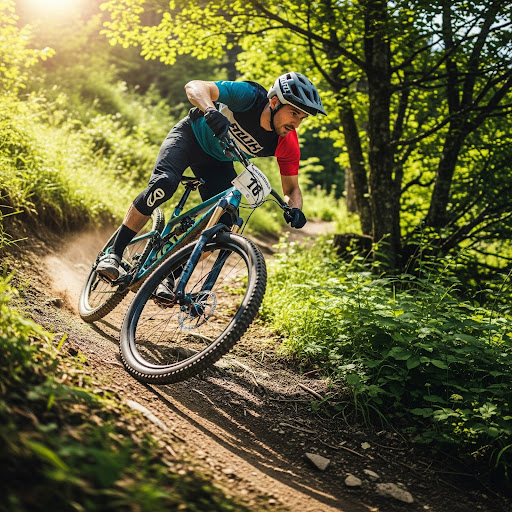
When it comes to mountain and road biking, climbing gets a lot of attention. But let’s be honest—there’s nothing quite like the thrill of a perfect descent. Whether you’re carving through switchbacks on a mountain trail or zooming down a winding country road, mastering downhill techniques will not only make your rides more enjoyable but also significantly safer.
Why Descending Skills Matter
Good descending isn’t just about going fast—it’s about control, confidence, and efficiency. A skilled descender uses less energy, reduces wear on their bike components, and most importantly, stays upright and safe. On technical terrain, these skills can be the difference between an exhilarating ride and a trip to A&E.
Essential Downhill Techniques
Body Position
The key to effective body positioning is lowering your centre of gravity by dropping your heels, bending your elbows and knees, and getting behind the saddle on steep descents. Stay relaxed throughout your body, as tension will transfer to your steering and cause jerky movements. Remember that your bike follows your eyes, so always look ahead to where you want to go, not at obstacles you’re trying to avoid.
Braking Fundamentals
Effective braking requires using both brakes properly, with your front brake providing 60-80% of stopping power, balanced with your rear brake for stability. Always reduce your speed before taking turns, not during them. Apply brakes progressively by feathering rather than grabbing them to avoid skidding or going over the handlebars in emergency situations.
Cornering Techniques
Master the outside-inside-outside line by approaching from the outside, cutting to the inside at the apex, and then exiting to the outside. Use countersteering by pushing slightly on the handlebars in the direction you want to turn. For maximum traction, weigh the outside pedal by putting pressure on your outside foot with the pedal at the 6 o’clock position.
Different Descents, Different Approaches
Mountain Bike Technical Descents
On technical terrain, focus on maintaining traction by keeping your weight centred over the bike, ready to shift backwards for drops. Allow your bike to float beneath you, using your limbs as natural suspension. Choose your line carefully by looking 10-15 feet ahead at all times, and consider dropping your seat post for maximum manoeuvrability on particularly challenging sections.
Road Bike Descents
For smooth pavement descents, prioritise speed and aerodynamics by getting in the drops for a lower centre of gravity and better brake control. Tuck your elbows and knees in to reduce wind resistance and pedal through gentle curves to maintain momentum. Exercise extra caution in wet conditions, as braking distance increases dramatically on slick surfaces.
Psychological Aspects
Managing fear is natural on challenging descents. Build confidence by progressing gradually from easier descents to more difficult ones. Practice specific technical sections repeatedly until they feel comfortable, and mentally visualise successful runs before attempting them. Riding with skilled descenders can help you learn proper technique through observation and friendly guidance.
Equipment Considerations
Your bike setup significantly impacts descending performance. Find the right balance with tire pressure—lower pressure increases traction but may feel unstable. Ensure your suspension is properly tuned to absorb impacts without bottoming out, and maintain your brakes for powerful, consistent stopping power. For mountain biking, consider a dropper post as an essential tool for technical descending.
Safety First
Despite the exhilaration of descending, always prioritise safety by wearing a helmet and appropriate protective gear. Never descend unfamiliar trails or roads at full speed, and stay alert for changing conditions like wet leaves, loose gravel, or sand that can appear unexpectedly. Know your personal limits and push them gradually as your skills improve.
Conclusion
Mastering the art of descending takes time, practice, and sometimes a bit of courage. Start with the basics, build your skills progressively, and soon you’ll find yourself flowing down hills with a confidence you never thought possible. The sensation of a perfectly executed descent—when you’re completely in tune with your bike and the terrain—is one of the most rewarding experiences in cycling.
Written by Niall O’Riordan UBS