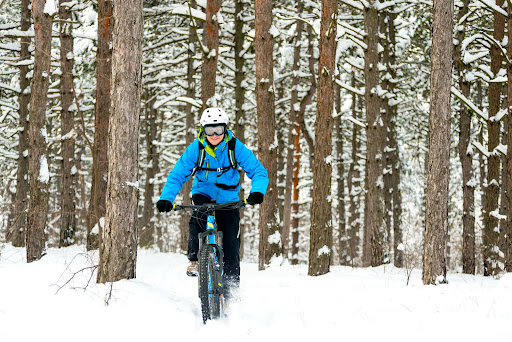
The Joy of Ideal Conditions
As a passionate mountain biker, I’ve come to understand the profound impact that weather has on the biking experience. It’s not just about the trail you choose or the bike you ride, the weather, in all its unpredictable glory, plays a significant role in shaping our encounters with the great outdoors.
When the conditions are just right, with the sky a brilliant shade of blue and the temperature at that perfect balance between warm and cool, mountain biking can be an experience like no other. It’s during these moments that the sport morphs into something far greater than a simple outdoor activity. It transforms into a near-mystical experience that is both exhilarating and liberating. During such times, the trail feels like a personal roller coaster ride, filled with thrilling highs and lows, and unexpected twists and turns. The surrounding nature, the rustling of the leaves, the melodious chirping of the birds, and the fresh, earthy smell that fills the air, all contribute to the overall joy and thrill of the ride.
The Challenge of Extreme Temperatures
However, as all outdoor enthusiasts know, the weather is not always our friend. There are times when the elements pose a significant challenge, turning our adventurous escapade into a test of endurance and skill. For instance, when the temperatures soar, the trail can become dry and dusty. This leads to a slippery surface that can make bike control a daunting task. The dust kicked up by the tyres can impair visibility, adding yet another level to the challenge. On the flip side, when the mercury drops too low, the trail can freeze over, turning the path into a hard and unforgiving surface that can be relentless on both the rider and the bike.
The Dual Nature of Rain
Rain, a seemingly innocuous weather condition, can have a drastic effect on the mountain biking experience. For mountain bikers, rain can be both a blessing and a curse. A light drizzle can actually enhance the biking experience by making the trail more grip-friendly. The trail becomes a bit softer, and the tyres can grip the surface better. However, a heavy downpour brings with it a whole different set of challenges. It can turn the trail into a muddy, slippery mess, significantly increasing the risk of accidents. Furthermore, the added difficulty of having to see through a sheet of rain can make the ride more treacherous than what one might have bargained for.
The Impact of Wind
Wind is another factor that is often overlooked but can greatly influence a biking experience. A strong headwind, blowing directly against you, can make your ride considerably more challenging. It forces you to pedal harder and exert more energy to maintain speed. Conversely, a tailwind, blowing from behind, can make your ride seem easier and faster. However, a strong tailwind is not without its own set of risks. It can push you towards obstacles or make it harder to control your bike at high speeds, especially during descents.
Concluding Thoughts
In the grand scheme of things, weather plays a pivotal role in the mountain biking experience. It has the power to either enhance your ride, turn it into an unforgettable adventure or hinder your journey, transforming it into a challenging ordeal. The impact of the weather is often determined by its severity and, crucially, your preparedness for it. As such, before you hit the trail, it’s essential to check the weather forecast and prepare accordingly.
Equipping yourself with the right gear, ensuring your bike is well-maintained, and having a thorough understanding of the trail can go a long way in ensuring a safe and enjoyable ride, regardless of the weather. So, next time you plan a mountain biking adventure, remember to consider the weather. After all, it could very well be the defining factor of your ride.
Written by Niall O’Riordan UBS