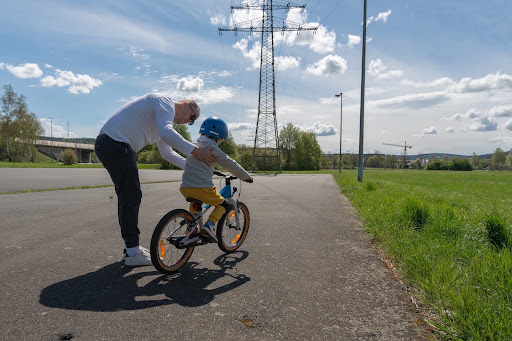
I still remember the exact stretch of pavement where my own confidence clicked into place as a kid — a slight downhill outside my nan’s house, someone’s hand letting go of the saddle without me noticing, and that first wobbly, glorious realisation that I was doing it on my own. Every parent I’ve ever talked to about teaching their child to cycle has a version of that same story waiting for them. It just takes the right approach to get there without a summer of tears, skinned knees, and a garage full of abandoned stabilisers.
Teaching a kid to ride isn’t really about the bike at all — it’s about balance, confidence, and knowing when to let go at the right moment. Here’s how I’d go about it, step by step.
Why It’s Worth the Patience
Cycling gives kids a level of independence that’s hard to replicate with any other activity at that age — a first taste of getting somewhere under their own steam. It’s also just good for them in ways that go beyond fitness; the same mental health benefits of cycling that keep adults coming back to it apply just as much to kids working through the frustration of falling off and getting back on again. That said, readiness matters more than age. Some kids are ready at three, others aren’t fussed until seven or eight, and forcing it before they’re interested tends to do more harm than good.
Choosing the Right Bike
The single biggest mistake I see parents make is buying a bike their kid will “grow into.” Don’t. A bike that’s too big is genuinely harder to learn on — the child can’t get their feet flat on the ground, can’t reach the brakes properly, and ends up feeling unstable before they’ve even started pedalling. Sit them on it in the shop: both feet should reach the ground with a slight bend in the knee, and their hands should fall onto the handlebars without stretching. A slightly small bike is always safer to learn on than a slightly large one.
Skip the Stabilisers: The Balance Bike Method
If I could pass on one piece of advice above all others, it’s this: skip the stabilisers entirely if you can. They teach a child to balance on four contact points instead of two, which means all that practice has to be unlearned again later. The far better approach, and the one most instructors use now, is to strip the pedals off entirely — or start on a proper balance bike — and let your child get comfortable scooting along with their feet, then gliding with their feet up off the ground for longer and longer stretches. Once they can glide and steer confidently without pedals, adding them back in is a small step rather than a giant leap.
If you’re working with a bike that already has pedals and training wheels, take the training wheels off before you do anything else, lower the seat so their feet sit flat on the ground, and let them go through the same scoot-and-glide process. It feels like a step backwards for a day or two. It isn’t.
Gearing Up Properly
A helmet is non-negotiable, and it’s worth taking the time to fit it properly rather than grabbing whatever’s on the shelf — it should sit level on the head, low on the forehead, with no more than a finger-width of space above the eyebrows, and the straps should form a snug V under each ear. Beyond that, I’d add fingerless gloves and knee pads for the early sessions especially; they take the sting out of the inevitable tumbles and keep confidence intact far better than a graze does. Closed-toe shoes with laces tucked away are worth checking too — it’s an easy thing to overlook and an easy thing to fix. My general cycling safety tips cover a lot of the same ground if you want the fuller picture once they’re riding further afield.
Finding the Right Place to Practice
Grass feels like the safer option, but it’s actually harder work — the extra resistance saps a child’s energy and makes it tougher to build momentum, which is exactly what they need for balance. A flat, quiet stretch of tarmac or a school playground on a weekend works far better than a back garden. Somewhere free of parked cars, kerbs, and other children on bikes lets them focus entirely on what their body’s doing, without worrying about obstacles.
Teaching the Ride Itself
Once pedals are back on, keep the seat low enough that their feet still touch the ground — a slightly-too-low saddle is a fair trade for the confidence of knowing they can catch themselves. Let them practice starting from a stopped position, one pedal up ready to push off, before worrying about anything else. If they’re struggling to find the pedals without looking down, a few minutes with the bike propped on something stable so they can pedal on the spot works wonders before you send them off moving.
Resist the urge to hold the bike itself while they’re riding — hold them, under the arms or by the shoulders, so you’re supporting the child rather than propping up the bike. It’s a small distinction but it changes what they’re actually learning to balance. And save braking for one of the last things you teach; a child who’s just found their balance doesn’t need to also be thinking about which lever does what. When you do get to it, teach a gentle squeeze rather than a grab — an over-eager first stop is usually what causes the one fall that knocks their confidence for the rest of the day.
Handling Falls and Setbacks
Every kid falls off. The ones who get back on quickly are usually the ones whose parents don’t make a big deal of it either way — a quick check that they’re okay, a “good effort, let’s go again,” and back to it. If a session turns into tears, it’s nearly always better to stop for the day than to push on; cycling should stay firmly in the “fun” category in their head, not become something they dread. Little rewards help too — a sticker, a favourite snack after a session, anything that reinforces the effort rather than only the outcome.
Knowing When They’re Ready for the Road
There’s no set age for this one either, but a good rule of thumb is that a child shouldn’t be riding on or near roads until they can start, stop, steer around an obstacle, and look over their shoulder without wobbling — all as second nature, not things they have to think hard about. Even then, quiet residential streets and shared paths are the place to build that experience, with you riding alongside rather than trailing behind, well before anything busier — and if it’s on offer locally, a proper cycle training course is a brilliant next step once they’ve got the basics from you.
Teaching your child to ride is one of those jobs that feels enormous the week before you start and looks completely different a fortnight later, once they’ve pedalled off ahead of you for the first time, looking thoroughly pleased with themselves. Keep it low-pressure, let them set the pace, and don’t be surprised if you end up just as proud of that first solo wobble down the path as they are.
Related reading: