I switched to clipless pedals years ago after getting tired of my foot skating off the pedal on a wet descent, and I switched back to flats on my mountain bike about eighteen months ago after one too many awkward, can’t-unclip-in-time moments at a junction. Neither decision was wrong. That’s really the whole answer to this question, but it’s not a very satisfying one on its own, so let’s actually get into it.
How Each System Works
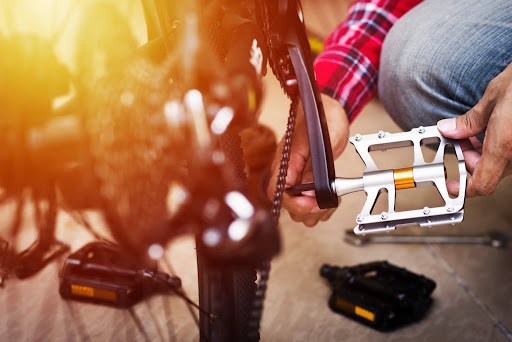
Flat pedals — sometimes called platform pedals — are exactly what they sound like: a flat surface, usually with metal pins for grip, that you can put any shoe on. Clipless pedals, confusingly, are the ones you actually clip into. A cleat bolted to the sole of a specific cycling shoe locks into a spring-loaded mechanism on the pedal, so your foot is fixed in place until you twist your heel outward to release it. The name comes from the fact that they replaced old-fashioned toe clips and straps, not because there’s nothing to clip into.
Road cyclists typically use a three-bolt cleat system (Look and Shimano SPD-SL being the most common), with a large cleat that spreads pressure across the sole for efficient power transfer. Mountain bikers and commuters tend to use two-bolt systems like Shimano SPD, which use a smaller, recessed cleat that lets you walk around normally without clacking across a café floor like you’re wearing tap shoes.
The Case for Clipless
The obvious appeal is the connection to the bike. With your foot locked to the pedal, you’re not just pushing down on the downstroke — you can pull up and through the back of the pedal stroke too, which matters more than people think during hard efforts. The research on this is more nuanced than the marketing suggests: for steady, moderate-intensity riding, there’s genuinely very little difference in efficiency between flats and clipless. Where clipless pedals pull ahead is in sprints and short, hard efforts, where studies have found higher power output meaningfully with a stiff-soled shoe locked to the pedal compared to a flat setup.
Clipless also gives you better control on technical terrain once you’re used to it, because your foot can’t bounce off the pedal over rough ground, and it’s a small mental relief on long days — one less thing to think about with every pedal stroke.
The Case for Flat Pedals
Flats have had a proper renaissance, particularly in mountain biking, and it’s not just nostalgia. Being able to put a foot down instantly, with zero risk of a clumsy, slow-motion tip-over at a stop sign, is genuinely valuable, especially if you’re riding in traffic or still building confidence. Flat pedals also force you to develop better bike-handling skills, because you can’t cheat a technical move by yanking up on the pedals — bunny hops, drops, and cornering all have to be done with proper body position rather than relying on the connection to the bike to bail you out.
They’re also just more practical for a lot of everyday riding. Commuting in normal shoes, running errands, hopping on and off the bike all day — flats let you do all of that without changing footwear or thinking about cleats at all. The trade-off is grip: a decent pair of pins under a grippy shoe sole holds far better than people expect, but a cheap set of flats with a smooth sole will absolutely let your foot slide in the wet, so it’s worth spending a bit more here rather than less.
What the Research Actually Says
It’s worth separating the marketing from the evidence here. At an easy or moderate pace, the difference between flats and clipless is close to negligible — your legs are doing the same work either way. It’s specifically at higher intensities, sprinting or hard climbing efforts, where a stiff shoe locked into a pedal has been shown to add several percentage points of power output. If most of your riding is steady commuting or weekend spins rather than racing, that gap matters a lot less than the marketing around clipless pedals would have you believe.
Which Suits Your Riding
If you’re commuting through traffic, running a cargo bike, or still building confidence on two wheels, flats are the easier, lower-stress choice — and if you’re only just past the stage of teaching a child to ride, you’ll know exactly why “easy to get a foot down” matters more than most people give it credit for. If you’re road riding regularly, doing longer distances, or you race, clipless pedals are worth the learning curve for the efficiency gains on hard efforts and the extra control at speed. Mountain bikers genuinely split down the middle here: enduro and trail riders skew increasingly toward flats for the control and confidence they offer on technical terrain, while cross-country racers still lean clipless for the power transfer on long climbs.
If you’re planning anything in the vein of the Wild Atlantic Way or another long-distance tour, it’s worth thinking this through properly before you set off rather than mid-trip — it’s exactly the kind of decision that belongs on your list before you finalise the rest of your long-distance gear, alongside the broader planning covered in cycling across continents. A lot of seasoned tourers actually run flats for exactly this kind of trip, purely so they can walk around a town in the evening without click-clacking down the street in cycling shoes.
Making the Switch
If you’re moving to clipless for the first time, set your release tension as low as it’ll go to start with, and practise clipping in and out while leaning against a wall or a doorframe before you ever take it out on the road — a good fifty or sixty repetitions is enough to build the muscle memory so it becomes automatic rather than something you have to think about at a red light. And get your cleats set up properly, or have a shop do it for you: a cleat that’s rotated even slightly wrong can cause knee pain that creeps in over weeks rather than showing up immediately, which makes it easy to blame the wrong thing. My maintenance tips cover keeping the pedal mechanism itself clean and lubricated, which matters more than people expect — a gritty, neglected clipless pedal is a genuine safety issue if it won’t release cleanly.
If you’re not sure which way to go, a lot of pedals now come in double-sided mountain bike style with a platform on one face and a clip mechanism on the other, which is a sensible way to hedge your bets while you decide — and they’re a genuinely good shout if you’re stuck for what to get a cyclist who hasn’t committed to one system yet. There’s also no rule saying you need the same setup on every bike — plenty of riders run clipless on the road bike and flats on the mountain bike, and there’s nothing wrong with that at all.
Whichever way you land, the pedals under your feet matter less than actually getting out and riding. Try both if you can before you commit to either, and don’t let anyone tell you one is objectively correct — it depends entirely on what you’re riding, and how.
Related reading:
- The Ultimate Gear Checklist for Long-Distance Cycling
- 10 Essential Maintenance Tips Every Cyclist Should Know
- Cycling Safety Tips – Staying Safe on Every Ride
- Beginner’s Guide to Mountain Biking – Getting Started on the Trails
- The Wild Atlantic Way by Bike: An Irish Coastal Route Guide
- Cycling Across Continents – Planning Epic Adventures
- A Christmas Gift Guide For Cyclists