Nobody forgets the first time they come back to a locked bike and find a cut cable and an empty rack. It’s a horrible, hollow feeling, and it’s one that far too many cyclists in the UK know. The bike itself is only part of it. It’s the commute you can no longer do, the weekend rides you were looking forward to, and the nagging sense that someone has taken something that was a bit of your routine, not just a bit of kit.
The good news is that bike theft is largely opportunistic, which means making your bike a harder, slower, more annoying target than the one next to it goes a very long way. Here’s how I’d go about it, from locks to trackers to what to do if the worst happens.
Start With the Lock (and Be Honest About the Budget)
The single most useful thing you can do is buy a decent lock, and the best way to judge one is the Sold Secure rating. It’s an independent UK testing scheme that grades locks as Bronze, Silver, Gold or Diamond based on how long they resist attack with increasingly serious tools. Litelok’s explainer puts it simply: Bronze stands up to basic tools for a minute, Silver for three minutes, Gold for at least five minutes of dedicated attack, and Diamond for at least five minutes, including a minute and a half with an angle grinder.
As a rule of thumb, Bronze suits a cheap bike left briefly somewhere low-risk, Silver is fine as a secondary lock, and anything you’d be genuinely upset to lose deserves Gold or Diamond. If you’re insured, it’s not just a rule of thumb either. UK insurers such as Cycleplan tie their requirements directly to the bike’s value: Bronze for bikes under £500, Silver under £1,000, and Gold or Diamond at £1,000 and above. Check your own policy before you buy.
The Best Locks I’d Look at in the UK
There’s no single perfect lock, because the right one depends on how you ride and where you park. These are the ones I’d put on a shortlist, all with proper Sold Secure ratings.
For maximum security: a Diamond-rated D-lock. The Litelok X1 and Litelok CORE Plus are both rated Sold Secure Diamond, which is the top tier and the one to look at if your bike is worth real money or lives in a high-risk area. If you’d rather stick with a classic rigid design, the Abus Granit X-Plus 540 is one of the best-regarded D-locks around, and it’s listed with Sold Secure and tested in the major cycling magazines as a top pick for awkward locking spots.
For a chain you can wear: Hiplok. The Hiplok Gold is a wearable chain lock rated Sold Secure Gold, which means you can wear it as a belt rather than lugging it in a bag, and for higher-risk spots there’s the Diamond-rated Hiplok DXXL. Chains are heavier than a D-lock, but they’re more flexible when you’re trying to lock a frame and a wheel to an awkward piece of street furniture.
As a second lock: something lighter, the Litelok GO Flexi-U is a Silver-rated option that works nicely as a secondary lock on your wheel, which is exactly the kind of “second lock, different type” setup police advice recommends.
If you want more than my shortlist, Cycling Weekly’s tested guide and the Sold Secure database are both good places to look at the wider field. Prices change all the time, so check current prices at the retailer before you buy.
How You Lock Matters as Much as What You Lock With
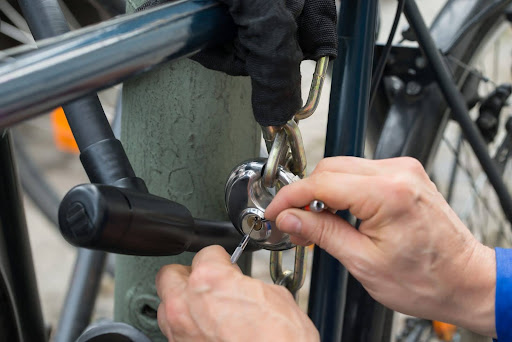
A top-tier lock used badly is still a gift to a thief. The police advice is clear on the basics: lock the frame and both wheels to a fixed stand, use two good locks of different types where you can, and position the bike so there’s almost no room for a thief to work a tool into the lock. A D-lock that fits snugly around the frame and the stand, with as little empty space as possible, is much harder to attack than a loose one.
Where you park counts too. Choose well-lit, busy spots with CCTV or recognised secure cycle parking, rather than a dark corner on the edge of a car park. And if you can, take the easily removed bits with you: lights, a saddle bag, and any quick-release parts. If you’ve got quick-release wheels, locking skewers are a cheap upgrade that stops a thief walking off with half your bike.
Keep your lock in good shape as well. A bit of lubricant on the barrel and shackle, particularly through a wet winter, keeps it turning smoothly, and it’s one of the things I’d fold in alongside my essential maintenance tips.
Add a Tracker as a Safety Net
A tracker won’t stop someone stealing your bike, so it’s not a substitute for a good lock. What it does is improve the odds of getting it back. The cheapest approach is a Bluetooth tag that uses a phone network, and the one I’d look at first for most riders is the Knog Scout, which hides under the bottle cage, works with Apple’s Find My network, and includes a loud alarm that goes off if the bike is moved.
There’s an important caveat. Bluetooth-based trackers only report a location when another compatible phone happens to pass nearby, so they can fall short in a garage, a van, or somewhere rural, and they only work with iPhones. For more expensive bikes, especially e-bikes, a dedicated 4G GPS tracker with its own SIM is a more reliable option, though it usually comes with a subscription. Either way, hide it well, and consider using a visible decoy alongside it.
Register It, Photograph It, and Get Insured
Do this bit before anything happens, because it’s far harder afterwards. Find your frame number, which is usually stamped underneath the bike near the pedals or where the rear wheel fits, and write it down. Take photos from several angles, keep your proof of purchase, and register the bike on BikeRegister, the national cycle database that police forces across the UK use to trace recovered bikes back to their owners. A marked, registered bike is a much less attractive thing for a thief to try to sell on.
If the bike is worth more than you’d like to replace out of your own pocket, it’s worth taking out proper cycle insurance. Specialist providers such as Cycleplan and Laka cover theft, but they’ll want proof of your lock to pay out, so keep the receipt and a photo of the make and model.
If the Worst Happens
Report it to the police online as soon as you can, with your frame number, registration details and photos, and update its status on the database. Speed matters, because the sooner it’s reported, the better the chances of it being flagged before it’s resold. Check local online marketplaces too. It sounds like a long shot, but it’s worked for plenty of people.
Don’t Forget Home
A surprising number of bikes are stolen from garages, sheds and hallways rather than the street. Lock your bike at home as carefully as you would in town, anchoring it to something solid, and don’t advertise that you own an expensive bike, whether that’s with a roof rack left on the car or a ride that starts and finishes at your front door on a public Strava map. Setting a privacy zone around your home address on Strava is a quick fix.
Bike security isn’t glamorous, and it’s rarely the part of cycling people get excited about. But it’s the part that protects everything else, whether that’s a daily commute, a weekend on the trails, or a long tour like the Wild Atlantic Way. Spend a bit more on the lock than you think you need to, lock it properly every single time, and you’ll be well ahead of most of the bikes parked around yours.
Related reading: